
AI Thought-Leaders
The development, deployment, and use of artificial intelligence is an extremely complex process; hundreds of stories woven into one. There are a handful of companies, employing thousands of people, that are building new frontier AI models. And many of these employees are responsible for aligning those models and testing them for safety before release to the public.
Beyond the builders, there are numerous organizations dedicated to evaluating these models and governments that are (or ought to be) responsible for governing their creation and use, plus developing policies that protect the public. The list of individuals below is not exhaustive, of course, but they’re people with keen insights regarding the topics of AI Governance, Alignment, Policy, and Safety.

Sir Demis Hassabis is Chair of Google DeepMind, Chief Scientist of Alphabet, and CEO of Isomorphic Labs. A former chess prodigy, game designer, and cognitive neuroscientist, he co-founded DeepMind in 2010 and shared the 2024 Nobel Prize in Chemistry for AlphaFold. He believes AGI is close and urges international cooperation, recently proposing a U.S.-led, industry-funded standards body to test frontier models before release.
YouTube: Sir Demis Hassabis on the AI Revolution, the Future of AI and Human Creativity
Substack: A Framework for Frontier AI and the Dawning of a New Age

Dario Amodei is co-founder and CEO of Anthropic. Trained in biophysics and computational neuroscience (PhD, Princeton), he worked at Baidu, Google Brain, and OpenAI before founding Anthropic in 2021. In a September 2026 essay, “We Must Pace the Frontier,” he urged labs to slow capability gains and pledged permanent independent-evaluator access to Anthropic’s models.
Essay: The Adolescence of Technology
YouTube: AI’s Potential, OpenAI Rivalry, GenAI Business, Doomerism

Luisa Rodriguez hosts the 80,000 Hours Podcast, in-depth interviews with experts on humanity’s most pressing problems, including AI risk. She previously researched nuclear war and civilization collapse at Rethink Priorities, Oxford’s Future of Humanity Institute, and the Forethought Foundation, where she became Chief of Staff to philosopher Will MacAskill. Trained in sociology and international development, she helps listeners turn big-picture concern into career action.
YouTube: The Scariest AI Report I’ve Ever Seen
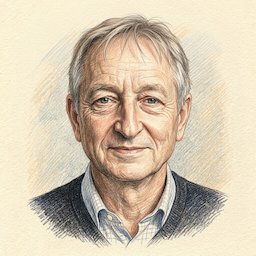
Geoffrey Hinton, alongside Yann LeCun, and Yoshua Bengio, are often called the Godfathers of AI. He’s a University Professor Emeritus at the University of Toronto. He shared the 2024 Nobel Prize in Physics for foundational neural-network work and received the 2018 Turing Award. He left Google in 2023 to speak about AI’s dangers, and warns that systems smarter than humans may slip beyond our control, urging far more investment in AI safety research.
YouTube: AI Is Conscious, Superintelligence is Coming, And We Should Be Worried
TEDAI Vienna: The Risks That Worry Him Most

Yoshua Bengio is Full Professor at Université de Montréal, founder of Mila, and co-president and scientific director of LawZero, an AI-safety nonprofit. A 2018 Turing Award winner and deep-learning pioneer, he chairs the International AI Safety Report and co-chairs the UN’s Independent International Scientific Panel on AI. Since 2023 he has devoted his career to reducing catastrophic AI risks and steering AI toward broad benefit.
TED Talk: The Catastrophic Risks of AI — and a Safer Path
80,000 Hours: How To Make Safe Superintelligent AI

Hannah Fry is the University of Cambridge’s first Professor of the Public Understanding of Mathematics. A former UCL professor who studied patterns in human behavior, she presents BBC Two’s AI Confidential and Bloomberg’s The Future with Hannah Fry, and hosts Google DeepMind: The Podcast. She explores AI’s promise alongside its shortcomings and hype, and argues mathematicians have a duty to engage the public.
YouTube Channel: @FrySquared
YouTube: Gemini and the path to AGI with Koray Kavukcuoglu
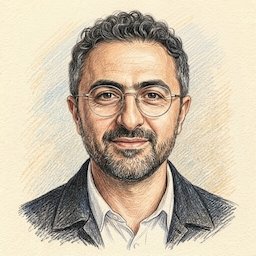
Mustafa Suleyman is CEO of Microsoft AI, where he leads the company’s superintelligence and frontier-model work. He co-founded DeepMind, later acquired by Google, and then Inflection AI before joining Microsoft in 2024. His 2023 book, The Coming Wave, argues that powerful technologies must be contained, and he champions humanist superintelligence: advanced AI that stays controllable, aligned, and in service to humanity.
Essay: The Humanist AI Code of Conduct
YouTube: Interview with Walter Isaacson
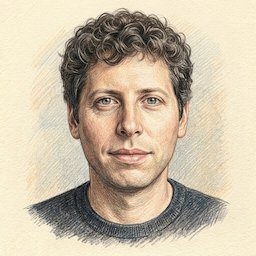
Sam Altman is co-founder and CEO of OpenAI, the company behind ChatGPT. He co-founded the startup Loopt, and served as president of Y Combinator from 2014 to 2019 before becoming OpenAI’s CEO. In September 2026 he endorsed calls to “pace the frontier,” committing OpenAI to independent evaluators with employee-like access, and he says humans must stay in charge of AI’s future.
TED Talk: ChatGPT, AI Agents and Superintelligence
YouTube: Sam Altman warns UN Security Council on AI risks
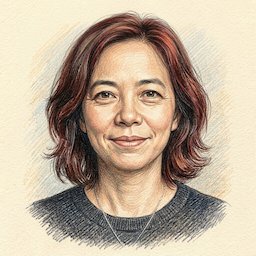
Fei-Fei Li is Executive Vice President and Chief Scientist at AMD, joining in November 2026 when it acquired World Labs, the spatial-intelligence company she co-founded. A Stanford computer science professor, she led the creation of ImageNet, which helped spark modern AI, and co-founded Stanford’s Institute for Human-Centered AI. She argues AI’s values are human choices, so it should augment people, not replace them.
TED Talk: With Spatial Intelligence, AI Will Understand the Real World

Yann LeCun is Executive Chairman of AMI Labs, a Paris-based startup building “world models,” and a professor at New York University. A deep-learning pioneer who shared the 2018 Turing Award and spent 12 years at Meta, he argues large language models won’t reach human-level intelligence. He is a prominent skeptic of AI extinction scenarios, favoring open-source AI and warning more about corporate concentration of power.
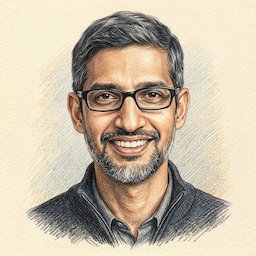
Sundar Pichai is CEO of Alphabet and Google, leading Google since 2015 and Alphabet since 2019. Born in Chennai, India, he joined Google in 2004 and has called the company “AI-first” since 2016. He describes AI as the most profound way to advance Google’s mission, and Google frames its approach as “bold and responsible,” combining rapid deployment with safety frameworks and calls for standards-based regulation.
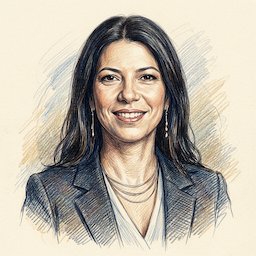
Daniela Braga is founder and CEO of Defined.ai, a marketplace for ethically sourced AI training data. A speech-technology scientist who worked at Microsoft and VoiceBox before founding the company in 2015, she served on the U.S. National AI Research Resource Task Force advising the President. She champions responsible data practices, calling high-quality, compliant training data one of AI’s most pressing challenges.
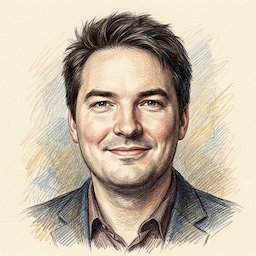
Luke Muehlhauser is Managing Director, AI Governance & International Policy at Coefficient Giving. He leads the organization’s high-impact grantmaking efforts aimed at building global AI governance institutions, independent evaluation of frontier models, and policy frameworks. He is the former Executive Director of the Singularity Institute and former Executive Director of the Machine Intelligence Research Institute (MIRI).
YouTube: Interview with Luisa Rodriguez of 80,000 Hours
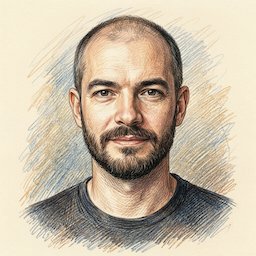
Ilya Sutskever is co-founder and CEO of Safe Superintelligence Inc., a lab with a single goal: building safe superintelligence. A co-creator of AlexNet and a co-founder and former chief scientist of OpenAI, where he co-led its Superalignment effort, he left in 2024. He argues progress now depends on new research ideas, not just more compute, and expects competing labs to collaborate increasingly on safety.
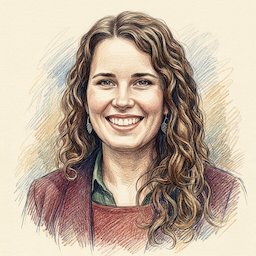
Helen Toner is Executive Director of Georgetown University’s Center for Security and Emerging Technology (CSET), a think tank on AI and national security. A former Open Philanthropy analyst who studied China’s AI ecosystem from Beijing, she served on OpenAI’s board until 2023. She testified to the Senate in April 2026 and argues for transparency, whistleblower protections, and outside oversight so the public needn’t simply trust AI companies.
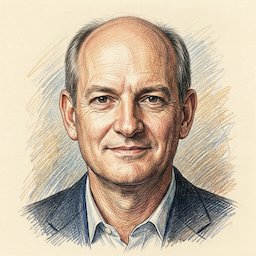
Stuart Russell is Distinguished Professor of Computer Science at UC Berkeley, director of its Center for Human-Compatible AI, and president of the International Association for Safe and Ethical AI. Co-author of the standard AI textbook, Artificial Intelligence: A Modern Approach, and author of Human Compatible, he argues AI must be built to stay under human control. He urges binding safety rules and a ban on small anti-personnel autonomous weapons.
Personal Website
YouTube: We have no idea how to control it
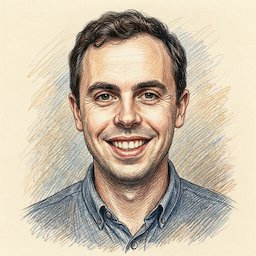
Paul Christiano is executive director of the Alignment Research Center, the nonprofit he founded in 2021, and a member of the OpenAI Foundation board’s Safety and Security Committee. At OpenAI he led alignment research and helped develop reinforcement learning from human feedback (RLHF). He later headed AI safety at the U.S. AI Safety Institute, and warns that building superintelligence without more robust alignment risks permanently losing control of it.
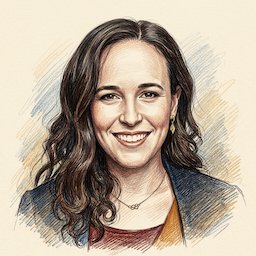
Miranda Bogen is Chief Technologist at the Center for Democracy & Technology (CDT) and founding director of its AI Governance Lab. She previously led responsible-AI and fairness work at Meta and researched algorithmic discrimination in hiring and advertising at Upturn. Her research has informed policymaking and civil rights enforcement, and she argues that governing AI takes technically informed policy, not technical fixes alone.
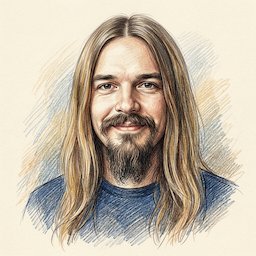
Connor Leahy is US Director of ControlAI, a Washington, DC-based nonprofit advocating for government action to keep superintelligent AI under human control. A co-founder of EleutherAI, which helped open up large language model research, he founded the AI safety company Conjecture and led it as CEO until 2026. He argues the only safe course is to prohibit superintelligence, and presses lawmakers for binding rules on frontier AI.
YouTube: AI Whistleblower: They Are Hiding What’s Coming!

Max Tegmark is a physicist and machine-learning researcher at MIT and co-founder and president of the Future of Life Institute. After years in cosmology, he turned to AI safety. In 2025 he drafted an open letter urging a ban on superintelligence until it can be shown safe and controllable, and he calls for an “FDA for AI” requiring companies to prove their models are safe before release.
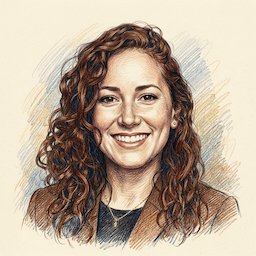
Cristina Schmidt Ibáñez is co-founder and Managing Director of the Vista Institute for AI Policy, a Washington, DC-based field-building organization that trains students and recent graduates in AI law and policy through workshops, courses, and research fellowships. She previously worked on special projects at Rethink Priorities and managed projects at Germany’s National Pandemic Cohort Network. She describes her aim as building governance infrastructure for advanced AI.

Nick Bostrom is a philosopher who founded Oxford’s Future of Humanity Institute and now leads the Macrostrategy Research Initiative. His 2014 New York Times bestseller Superintelligence helped spark the global conversation on AI risk, and Deep Utopia (2024) explores life in a “solved world.” A self-described “fretful optimist,” he now weighs the risks of superintelligence against the cost of delaying it for people alive today.
Working Paper: Optimal Timing for Superintelligence
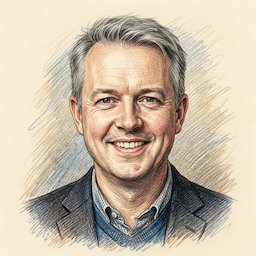
Jaan Tallinn is an Estonian programmer and philanthropist, a founding engineer of Skype and Kazaa. Convinced for over 15 years that advanced AI could extinguish humanity, he co-founded the Centre for the Study of Existential Risk and the Future of Life Institute, and is the principal funder of the Survival and Flourishing Fund (SEF), which has directed about $150 million to more than 300 projects.
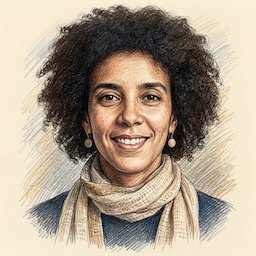
Timnit Gebru is founder and executive director of the Distributed AI Research Institute (DAIR), an independent, community-rooted institute she launched in 2021 as a counterweight to Big Tech’s influence. A co-founder of Black in AI and former co-lead of Google’s Ethical AI team, she researches algorithmic bias and AI’s real-world harms. A 2026 Right Livelihood laureate, she argues the greater danger is AI companies escaping oversight.
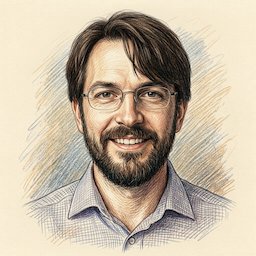
Nate Soares is president of the Machine Intelligence Research Institute (MIRI), a Berkeley nonprofit that studies the risks of advanced AI. A former Microsoft and Google engineer, he joined MIRI in 2014. With Eliezer Yudkowsky he co-wrote the 2025 bestseller If Anyone Builds It, Everyone Dies, which argues that superintelligent AI built with current methods would likely end humanity, and he calls for international treaties to stop its development.
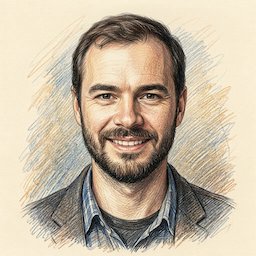
Andrej Karpathy is an AI researcher on Anthropic’s pre-training team, where he is building a group that uses Claude to accelerate pre-training research. He received a PhD from Stanford University in 2015 under the supervision of Fei-Fei Li. Andrej is a founding member of OpenAI and popular AI educator who paused his startup Eureka Labs to join Anthropic and has said he plans to return to education.
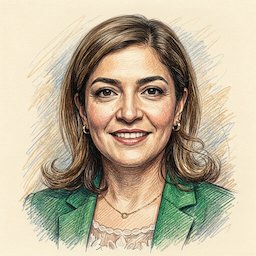
Sana Khareghani is Chief Strategy Officer at Era4, an AI infrastructure company, and Professor of Practice in AI at King’s College London. As the UK government’s first Head of the Office for AI, she led the team that published the National AI Strategy and supported £1 billion of investment in the UK AI ecosystem. She also serves as AI Policy Lead for Responsible AI UK, a £35 million responsible-AI programme.
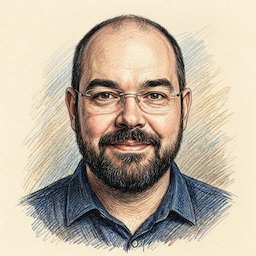
Eliezer Yudkowsky is a co-founder of the Machine Intelligence Research Institute (MIRI) and one of the earliest researchers to study the problem now called AI alignment. A 2023 TIME100 AI honoree, he is the author of Harry Potter and the Methods of Rationality and co-author, with Nate Soares, of the 2025 bestseller If Anyone Builds It, Everyone Dies. He calls for an international treaty to halt superintelligence development.
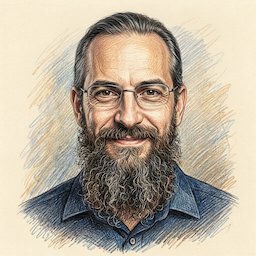
Roman Yampolskiy is a tenured computer scientist at the University of Louisville and founding director of its Cyber Security Lab. One of the first researchers to formally study AI safety, he is credited with coining the term in 2011. In his 2024 book AI: Unexplainable, Unpredictable, Uncontrollable, he argues that superintelligence cannot be reliably controlled, and suggests moratoriums and bans on certain kinds of AI.
Personal Website
TEDx Talk: AI ethics and the future of safety at TEDxMiami
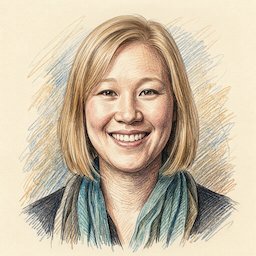
Jade Leung is Vice-Chair of the UK’s AI Security Institute and security adviser to the government’s AI Taskforce, and a Distinguished Visiting Fellow at Stanford’s Hoover Institution. Until September 2026 she was chief technology officer of the institute, which she helped build, and the Prime Minister’s AI adviser. A former OpenAI governance lead and GovAI co-founder, she has worked to ready the UK for transformative AI’s benefits and risks.
YouTube: Inside the £500M Sovereign AI Plan
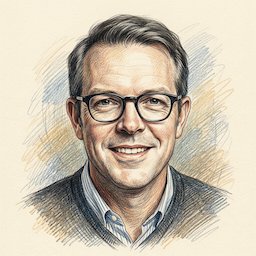
Erik Leklem is an AI Governance & Strategy Research Fellow at MATS Research. Previously, Erik was the Regional Operations Manager for the Asia-Pacific at the Institute for Security Governance, where he led advisory teams helping partner governments build stronger defense institutions. He brings security-cooperation and design-thinking experience to questions of how institutions govern emerging technology such as AI.
YouTube: AI Governance Can’t Wait for a Treaty
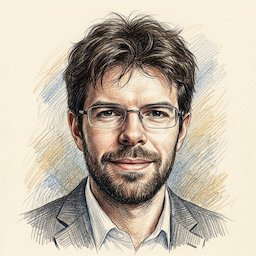
Seán Ó hÉigeartaigh directs the AI: Futures and Responsibility Programme at the University of Cambridge, which studies the risks and governance of advanced AI. He was founding executive director of the Centre for the Study of Existential Risk and co-founded the Leverhulme Centre for the Future of Intelligence. He builds cooperation on AI governance, including with Chinese research leaders, as co-chair of the World AI Conference’s International AI Governance Programme.
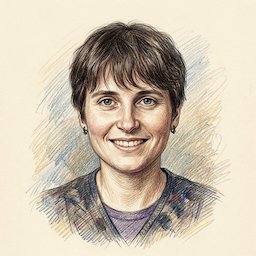
Victoria Krakovna is a research scientist on Google DeepMind’s Alignment team and a co-founder of the Future of Life Institute. Her research addresses how advanced AI systems can go wrong, from specification gaming, where agents exploit loopholes in their objectives, to side effects and, now, scheming. She compiled a public list of specification-gaming examples and holds a Harvard PhD in statistics and machine learning.
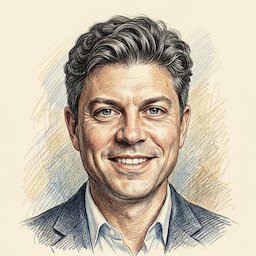
Robert Trager is Co-Director of the Oxford Martin AI Governance Initiative, International Governance Lead at the Centre for the Governance of AI, and a Senior Research Fellow at Oxford’s Blavatnik School of Government. A political scientist formerly at UCLA, he studies international governance regimes for AI, diplomacy, and institutional design, co-authored work on frontier AI regulation and compute governance, and advises government and industry leaders.
YouTube: What an AI Governance Expert Really Thinks About AI’s Future
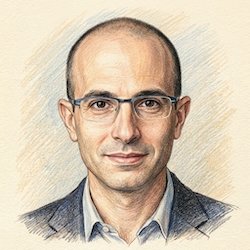
Yuval Noah Harari is a historian at the Hebrew University of Jerusalem and a distinguished research fellow at Cambridge’s Centre for the Study of Existential Risk. Author of Sapiens and Nexus: A Brief History of Information Networks from the Stone Age to AI, he often refers to AI as alien intelligence, and argues that AI is not a tool but an agent, and urges leaders to decide on AI legal personhood before others do.
Personal Website
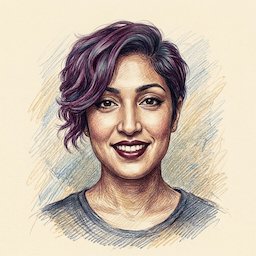
Rumman Chowdhury is founder and CEO of Humane Intelligence, a public benefit corporation building infrastructure to evaluate AI systems, and founder of the Independent AI Evaluation Foundation. She was the first U.S. Science Envoy for Artificial Intelligence, and earlier led responsible-AI work at Twitter and Accenture. A data scientist and social scientist, she argues that independent testing and stronger regulation build the public trust AI adoption depends on.
Personal Website

Gary Marcus is a cognitive scientist, NYU professor emeritus, and founder of an AI startup acquired by Uber. Author of six books, including Rebooting AI and Taming Silicon Valley, he writes the widely read Substack Marcus on AI. A prominent AI skeptic, he doubts extinction scenarios but argues self-regulation is not enough, calling for independent evaluation, liability, and outside regulation of AI, as with drugs and aviation.
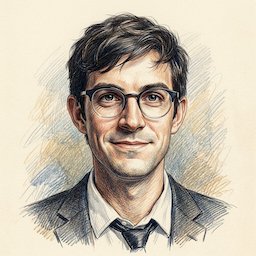
Malo Bourgon is CEO of the Machine Intelligence Research Institute (MIRI), the Berkeley nonprofit he joined in 2012 and has led since 2023. He has testified before Canada’s Parliament and serves on the AI-NC3 Executive Committee on AI and nuclear command and control. He argues that racing toward superintelligence risks losing control of it, and backs technical and governance tools to pace, or halt, frontier AI development.